

Technics - SU-G700M2 Stereo Integrated Amplifier
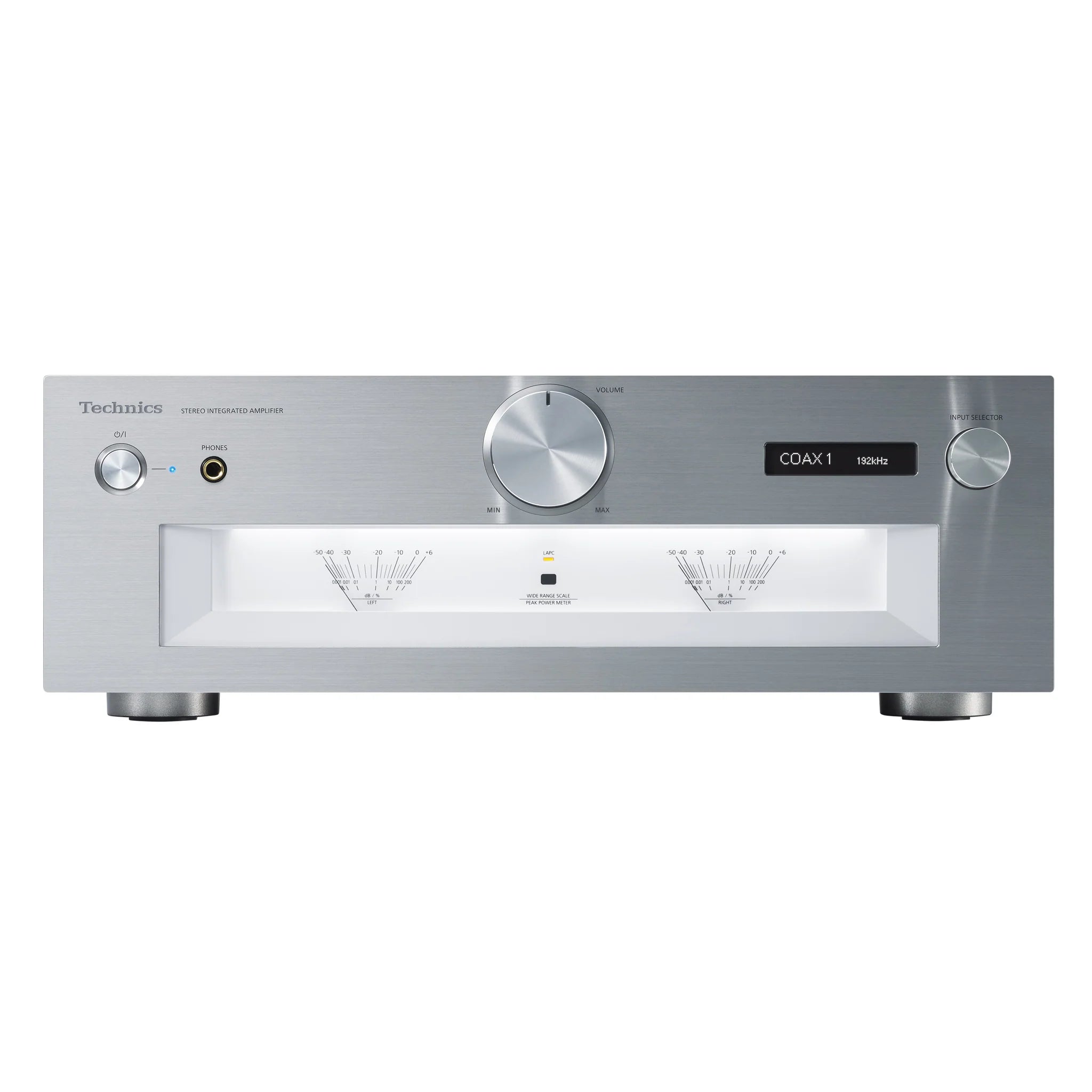
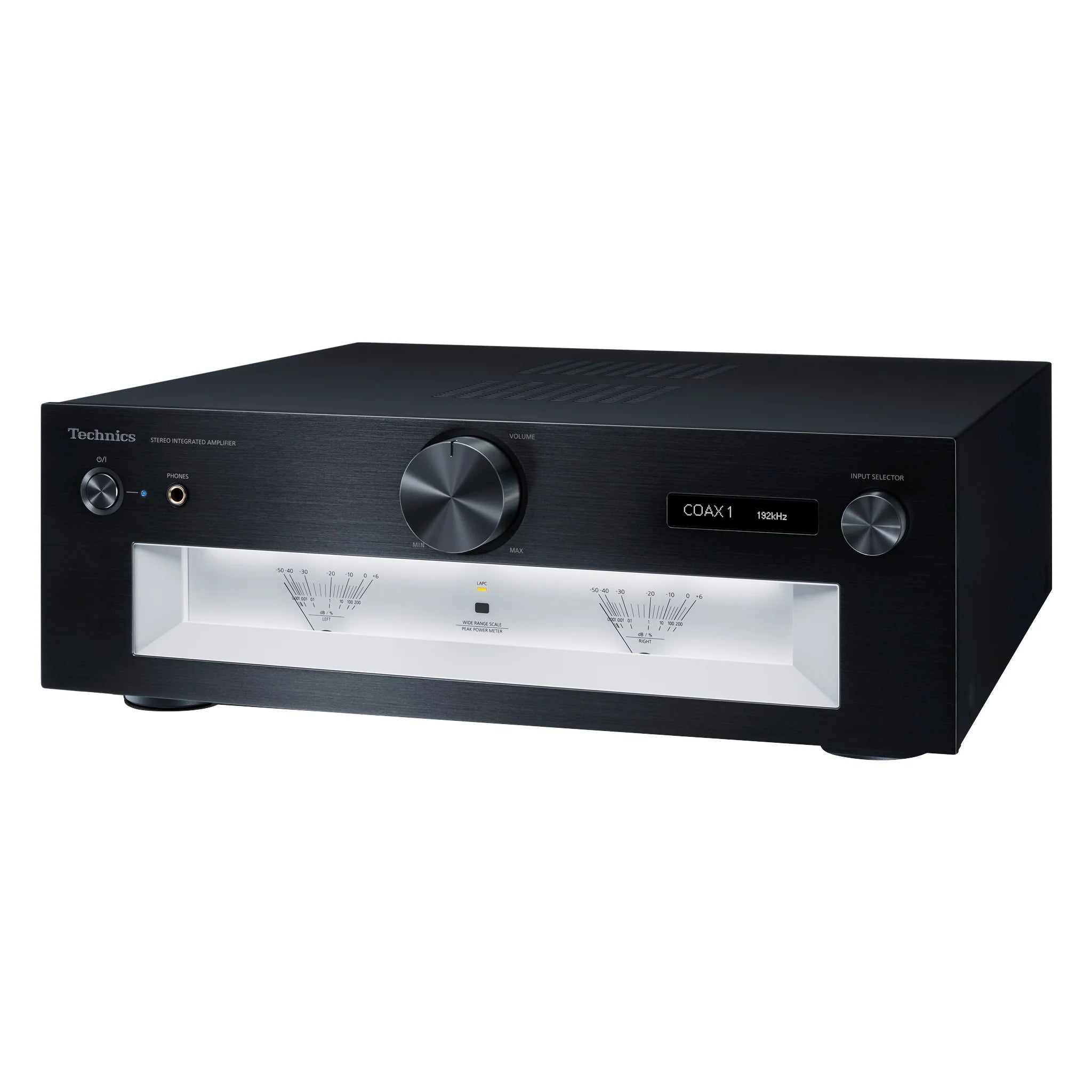
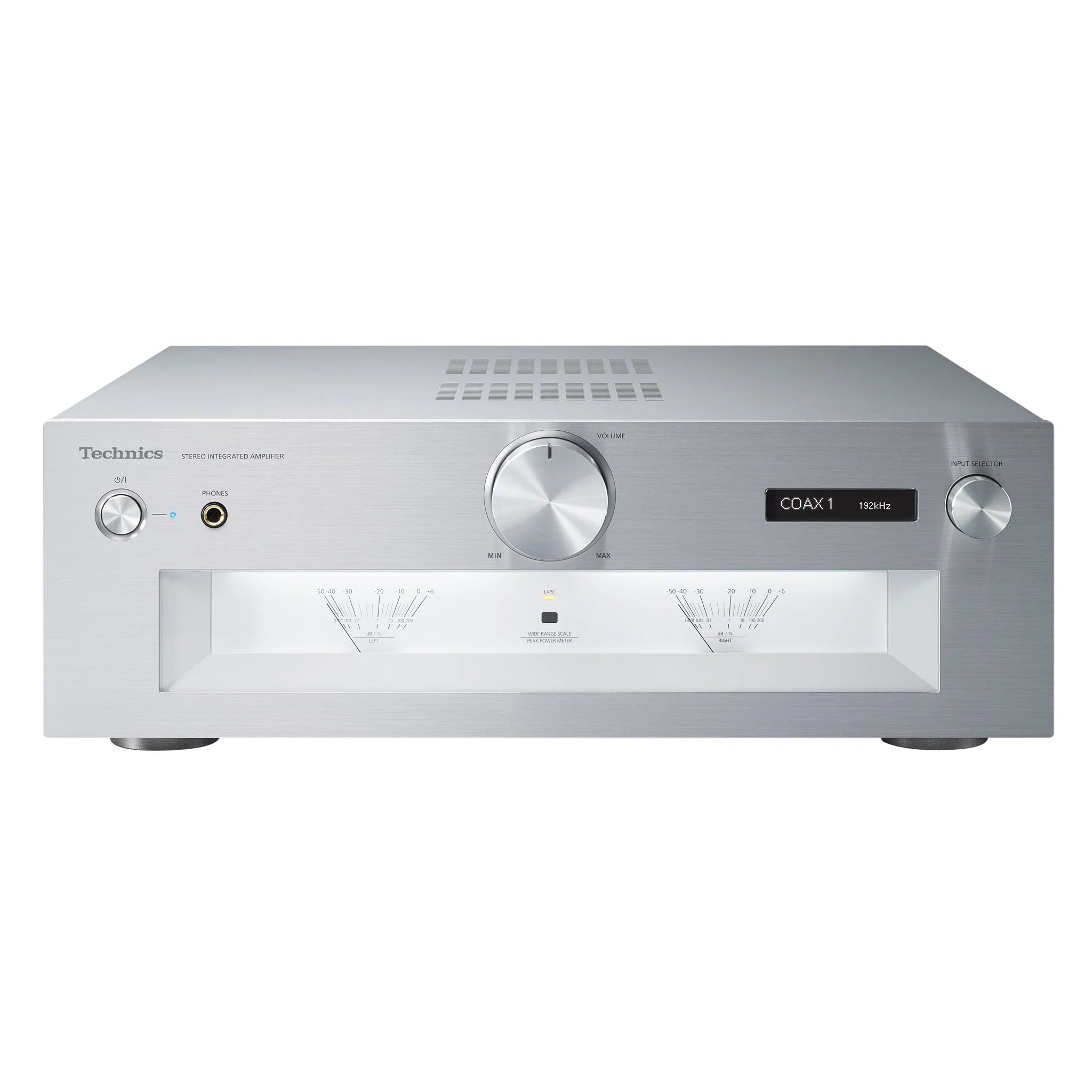
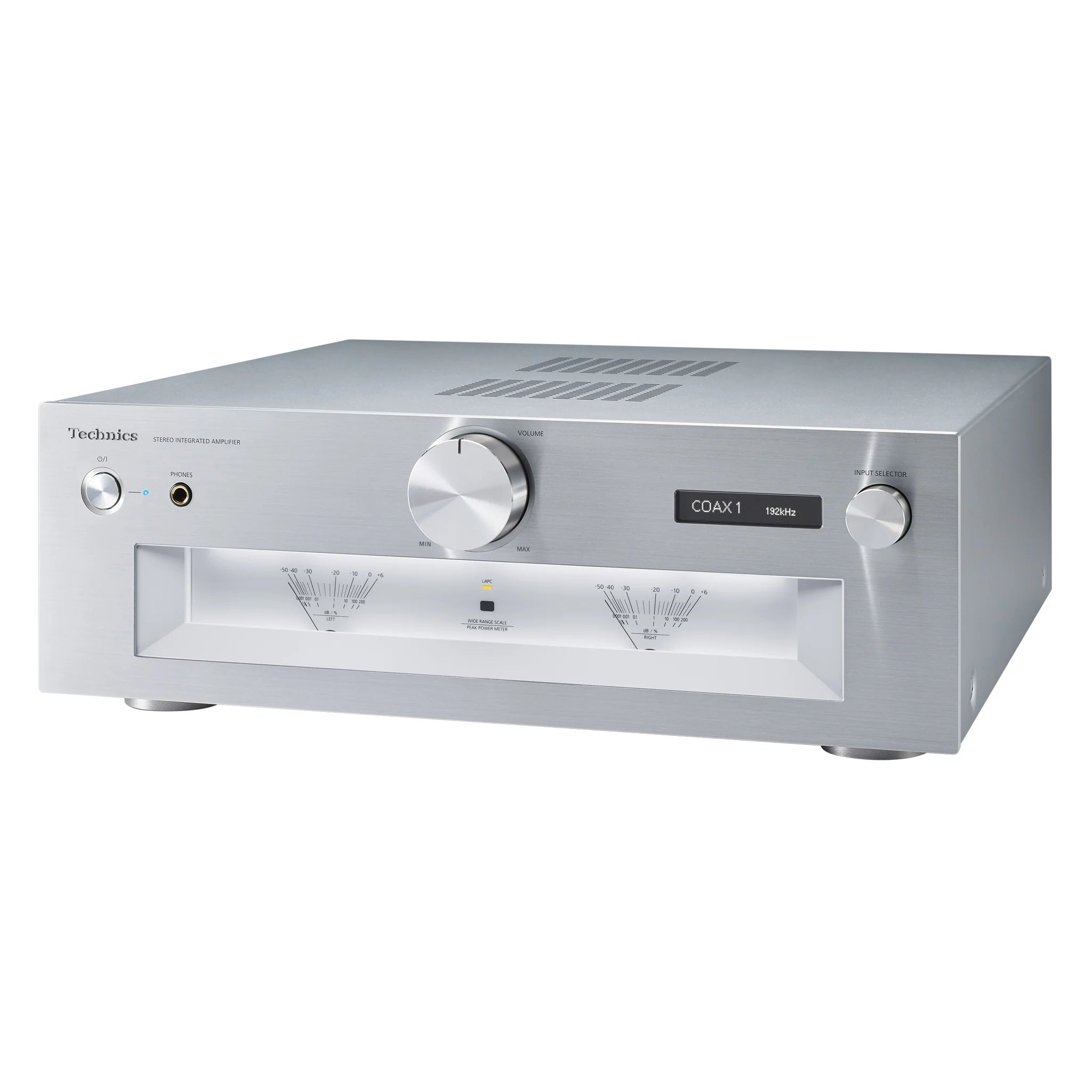
Technics - SU-G700M2 Stereo Integrated Amplifier
The Grand Class full-digital integrated: 70W into 8Ω, JENO Engine, LAPC speaker calibration, a proper MM and MC phono stage, and five digital inputs. No streaming, deliberately.
The SU-G700M2 is the SU-R1000’s architecture scaled to a price a great many more people can reach. It is a full-digital amplifier — the signal stays in the digital domain and the output stage does the conversion — built around the same JENO Engine jitter management and the same LAPC load calibration as the flagship.
LAPC is the feature worth pressing the button for. Run it once with your speakers connected and the amplifier plays a test signal through the actual load, measures the impulse response it gets back, and corrects its own phase and amplitude response toward the ideal. Loudspeakers are reactive, complicated loads whose impedance swings wildly with frequency; correcting for the specific one you own rather than a theoretical resistor is a genuinely useful thing for an amplifier to be able to do.
The phono stage handles both moving magnet and moving coil through a single input — 2.5mV at 47kΩ for MM, 300µV at 100Ω for MC, with RIAA held to ±1dB. Loading is fixed at those values; there are no selectable steps, and the SU-R1000’s cartridge measurement and correction features are not present on this model.
Digitally there are two optical, two coaxial and one USB-B input, taking PCM to 384kHz and 32 bits and DSD to 11.2MHz.
One thing to be clear about before you order, because it catches people out: this amplifier has no network functions whatsoever. Technics sells it alongside the SU-GX70, which is a streaming amplifier, and the two look similar in a lineup listing. The SU-G700M2 has no Ethernet, no Wi-Fi, no Bluetooth and no app. It is a very good amplifier with digital inputs, and if you want streaming you add a streamer.
Features
- Full-digital amplifier: 70W + 70W into 8Ω, 140W + 140W into 4Ω
- JENO Engine jitter elimination
- LAPC load-adaptive phase calibration against your actual speakers
- Moving magnet and moving coil phono stage with RIAA held to ±1dB
- Two optical, two coaxial and one USB-B digital input
- PCM to 384kHz/32-bit; DSD to 11.2MHz
- Line out and pre out; 6.3mm headphone output
- No network features — a pure amplifier with digital inputs
Specifications
- Type: Stereo integrated amplifier, Grand Class, with digital inputs and a phono stage
- Topology: Full digital amplifier — the same architecture family as the SU-R1000, scaled down
- Rated power output: 70W + 70W (1kHz, THD 0.5%, 8Ω, 20kHz LPF); 140W + 140W (1kHz, THD 0.5%, 4Ω, 20kHz LPF). No FTC-style continuous 20Hz–20kHz rating is published
- Load impedance: 4–16Ω
- Frequency response, line: 5Hz–80kHz (−3dB, 8Ω)
- Frequency response, digital: 5Hz–80kHz (−3dB, 8Ω)
- Frequency response, phono: 20Hz–20kHz, RIAA deviation ±1dB, 8Ω
- THD: Only the 0.5% figure quoted with the power ratings is published
- Signal-to-noise ratio: Not published. Technics publishes no signal-to-noise ratio for any of its full-digital amplifiers — we checked the US page, the UK page, the catalogue and the owner’s manual.
- Damping factor: Not published. Technics publishes no damping factor for any of its full-digital amplifiers. A conventional damping-factor figure is arguably less meaningful for a switching output stage, but Technics does not say that either — the row is simply absent.
- JENO Engine: JENO Engine — Jitter Elimination and Noise-shaping Optimisation. A clock generator and re-clocking stage that Technics says reduces jitter across the entire frequency range. Jitter is timing error in the digital signal; left alone it smears detail, and it is the single most audible failing of an indifferent digital front end.
- LAPC: LAPC — Load Adaptive Phase Calibration. The amplifier sends a test signal through the actual speakers and cables you have connected, measures what comes back, and uses DSP to correct its own phase and frequency response toward that of an ideal amplifier driving that specific load. Most amplifiers are designed against an assumed resistive load; a real loudspeaker is nothing of the sort.
- Features not carried over from the SU-R1000: No ADCT distortion cancellation, no Advanced Speed Silent Power Supply and no Intelligent Phono EQ cartridge-measurement system. Those are SU-R1000 features
- Phono stage: Moving magnet and moving coil through one combined input. MM 2.5mV at 47kΩ; MC 300µV at 100Ω. Loading is fixed at those values with no user-selectable steps. Gain is not published as a separate dB figure
- Line input sensitivity: 200mV / 22kΩ
- Digital conversion: Technics’ own full-digital / PWM architecture. No off-the-shelf DAC chip is used or named
- PCM support: 32, 44.1, 48, 88.2, 96, 176.4, 192, 352.8 and 384kHz at 16, 24 and 32 bit
- DSD support: 2.8MHz, 5.6MHz and 11.2MHz
- MQA: Not published
- Network features: None. No Ethernet, Wi-Fi, Bluetooth, streaming services, Roon or DLNA, and no control app. Note that Technics positions this model next to the network-capable SU-GX70 — do not assume streaming from the family resemblance
- Inputs: LINE x2, PHONO (MM/MC combined) x1, optical x2, coaxial x2, USB-B x1
- Outputs: LINE OUT x1, PRE OUT x1, headphone (6.3mm stereo). No subwoofer output
- Headphone output: 6.3mm stereo, 0.75mW into 32Ω. This figure appears in the owner’s manual only, not on the web spec pages
- Speaker terminals: Not itemised as a distinct specification line by Technics. Bi-wiring is not mentioned
- Dimensions: 430 x 148 x 428 mm (W x H x D)
- Weight: Approximately 12.7kg (28 lbs)
- Power supply: AC 120V, 60Hz in the US; AC 220–240V, 50/60Hz in the UK. Performance figures are identical between regions
- Power consumption: 95W
- Standby consumption: Approximately 0.5W, from the owner’s manual; not listed on the web spec pages
- Country of manufacture: Not published. Technics prints no country-of-manufacture statement on its product pages, specification sheets or owner’s manuals for this product — we checked all three. The owner’s manual lists Panasonic’s corporate address in Osaka, but a head office is not a factory and we are not going to present it as one.
- Warranty: Panasonic administers Technics warranty in the United States and the term varies by model rather than by product category. The SU-G700M2 is listed in Technics’ own US warranty table at three years parts and three years labour. Technics states that product registration is not required and does not extend coverage. A dated sales receipt is required, coverage runs to the original purchaser, and the product must be purchased and serviced in the United States. Non-rechargeable batteries, antennas and cosmetic cabinet parts are excluded.