

Wharfedale - Linton 85th Anniversary Bookshelf Speakers
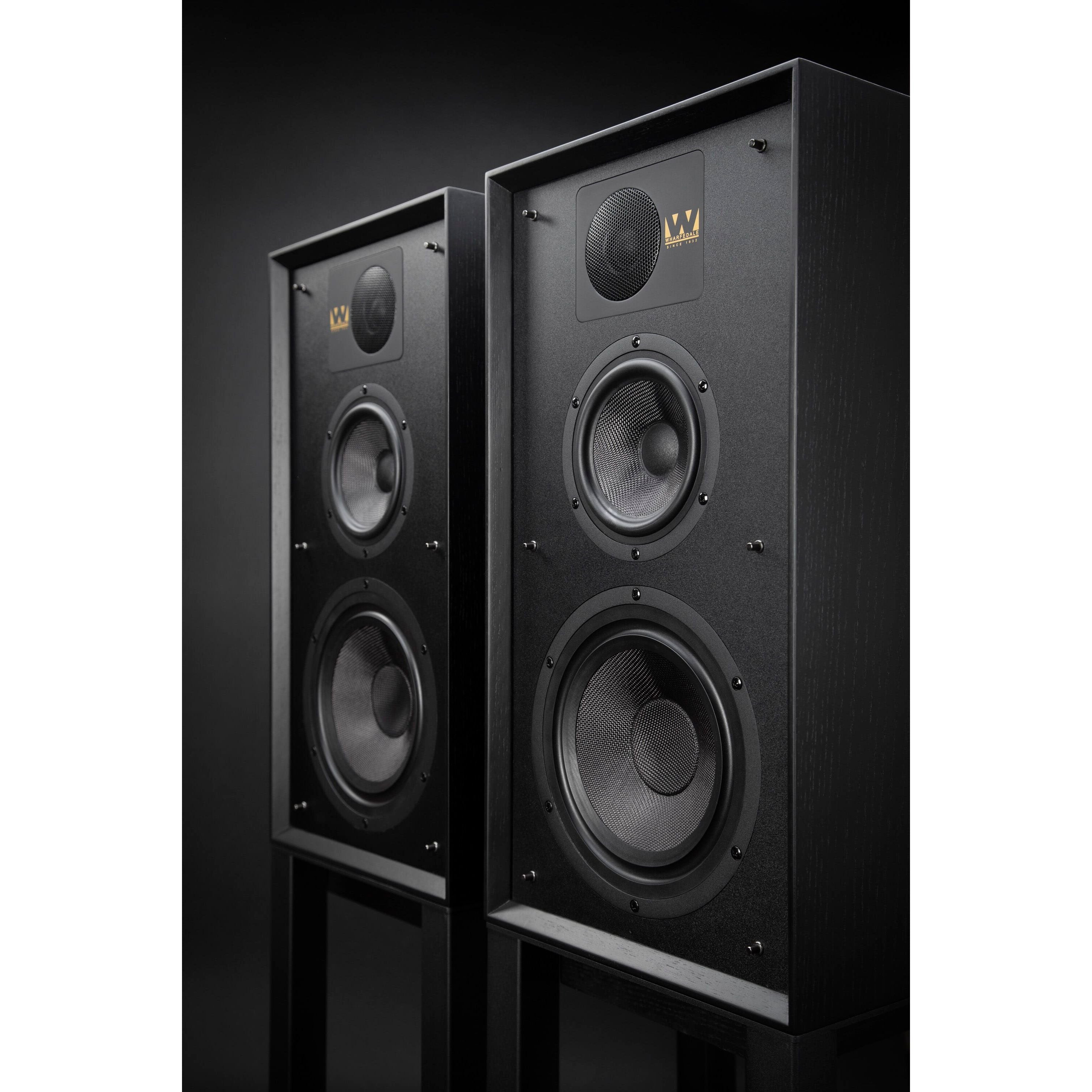
Wharfedale - Linton 85th Anniversary Bookshelf Speakers
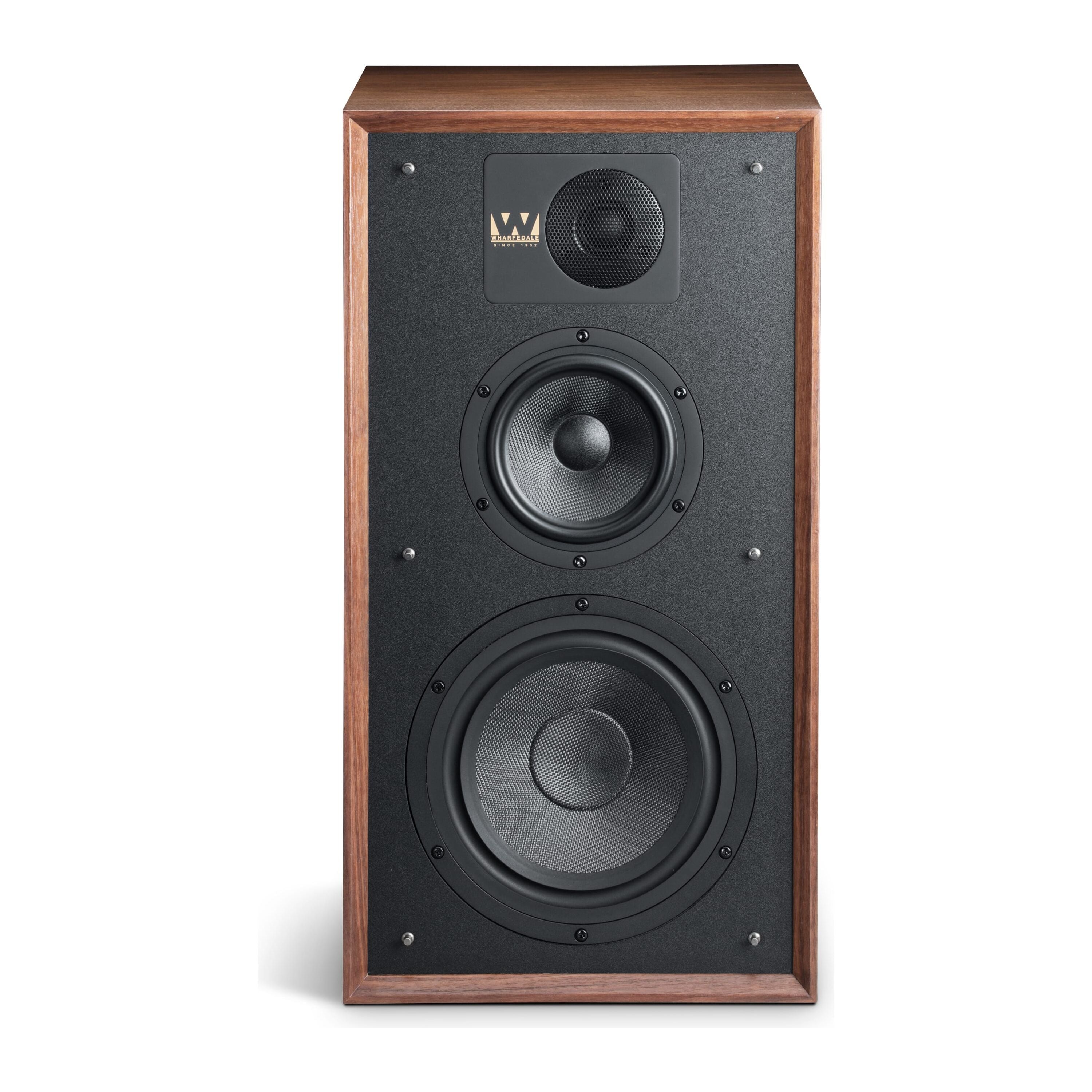
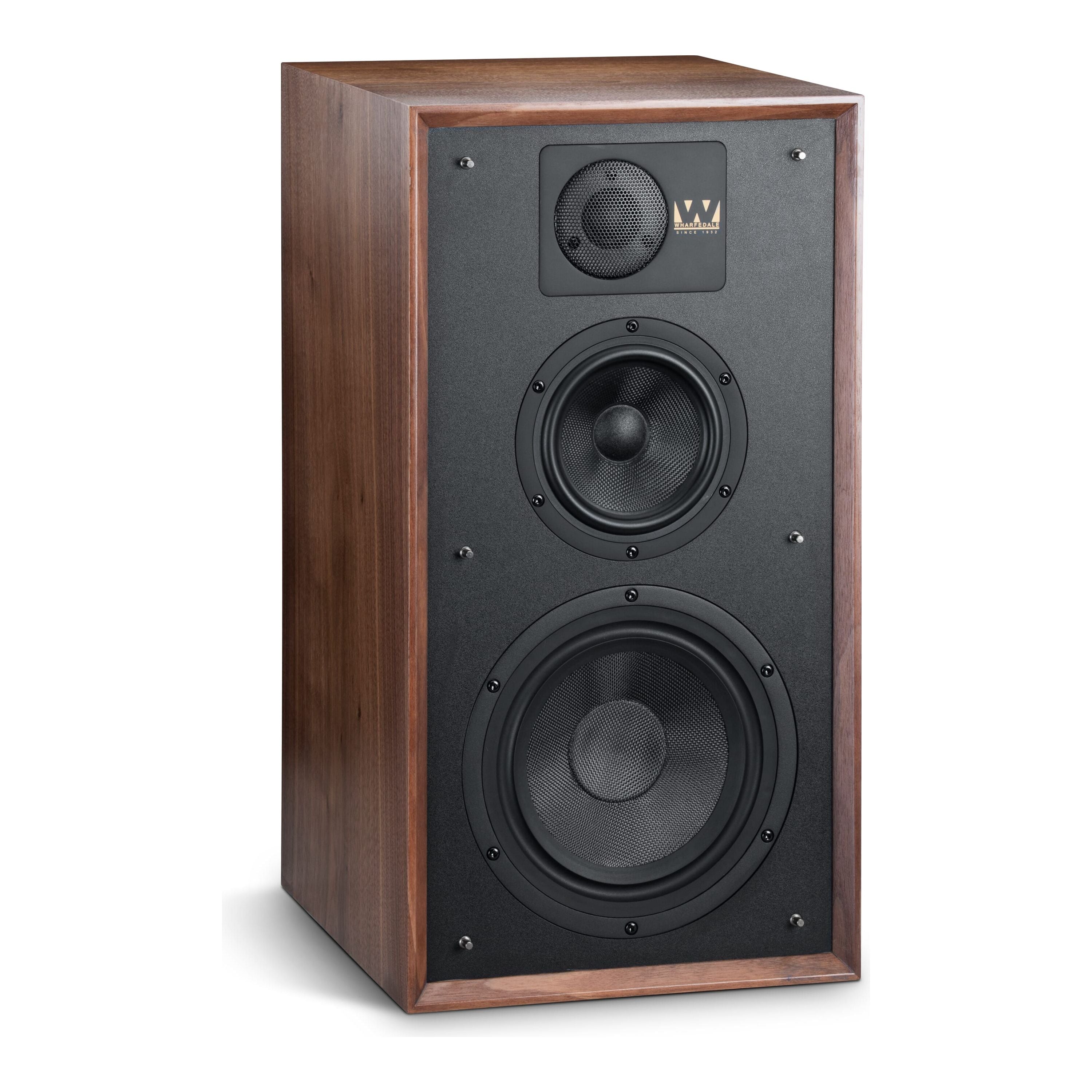
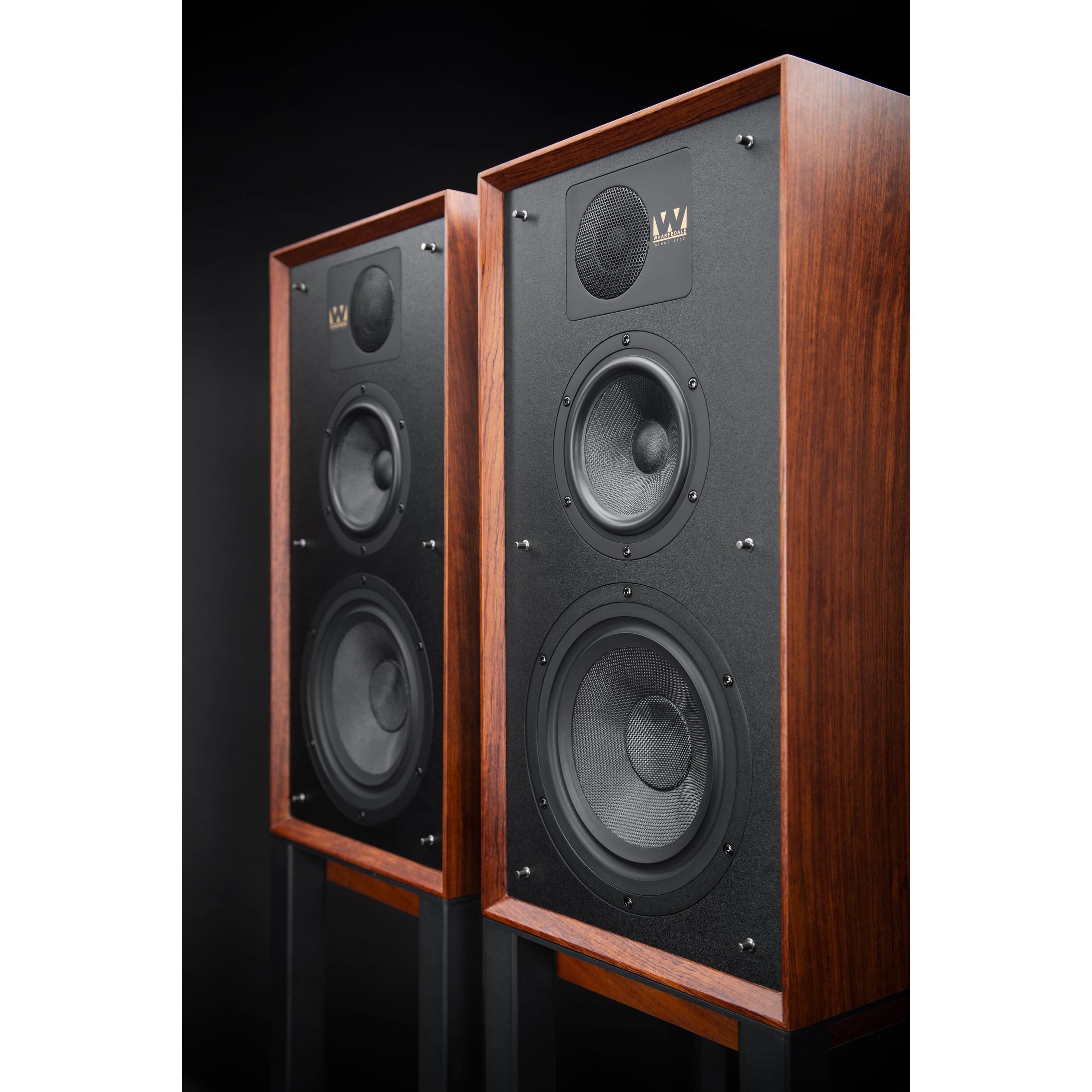
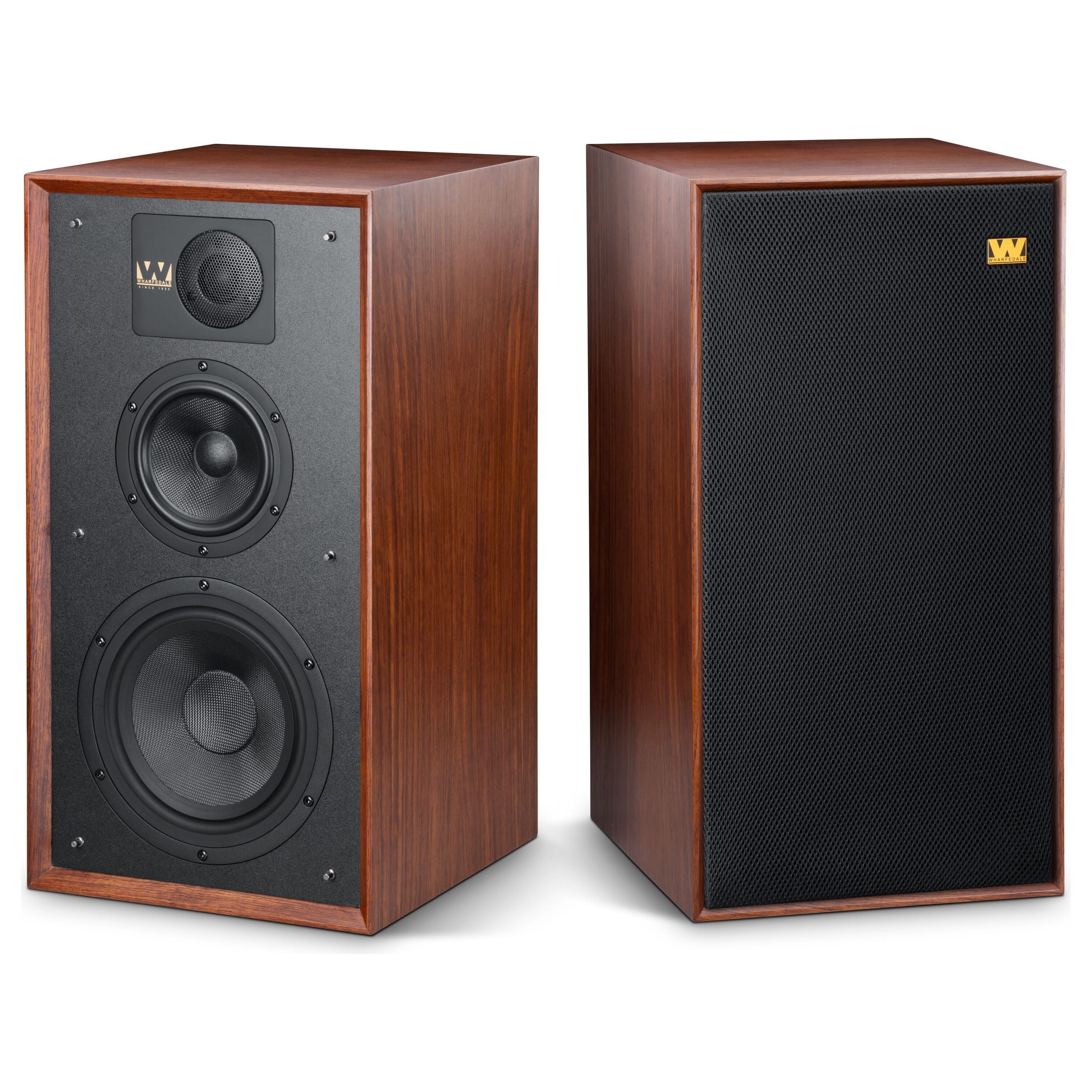
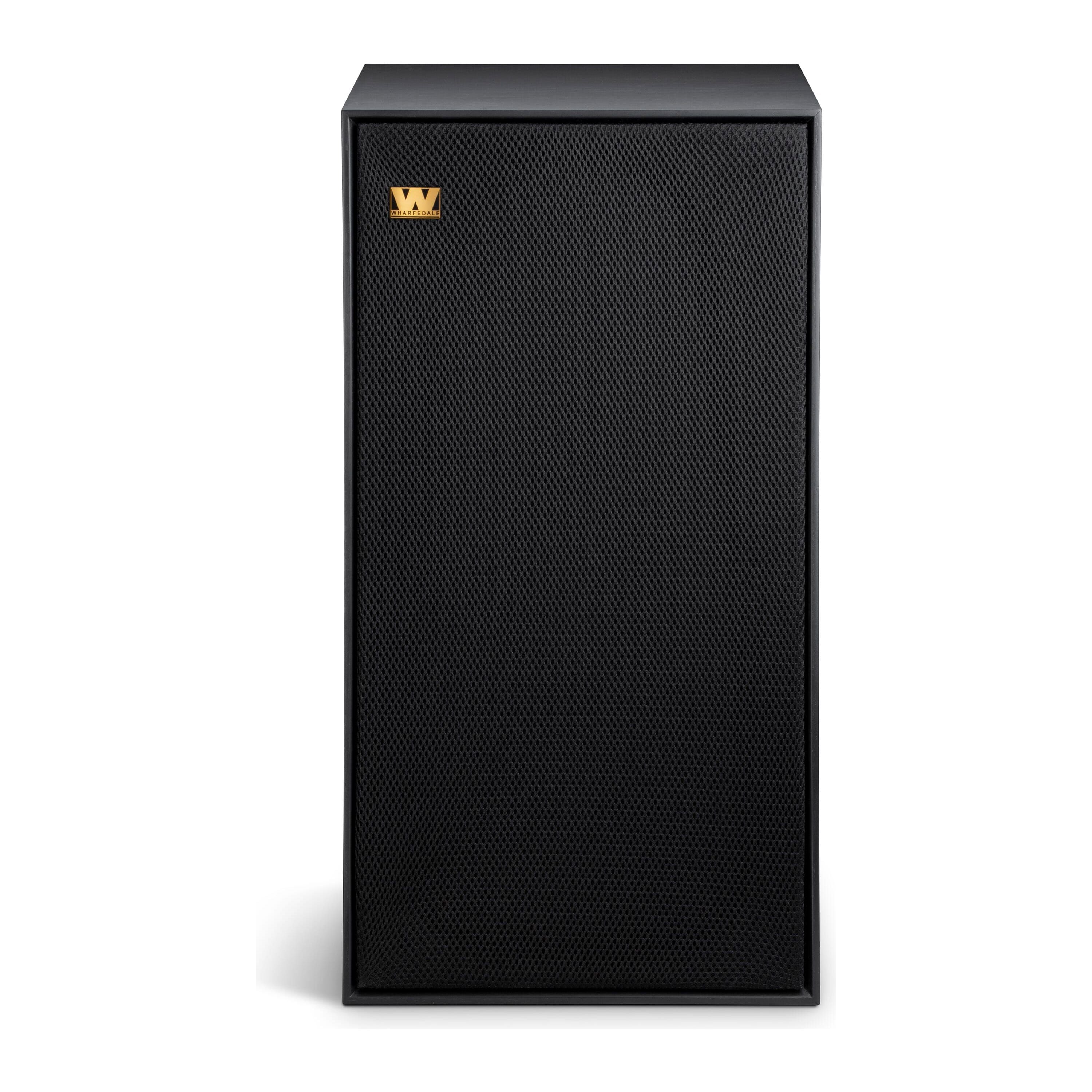
A proper three-way standmount with an eight-inch Kevlar woofer and a midrange in its own sealed enclosure — 1965 styling, hand-matched veneer, and 57.6 litres of cabinet. Choose speakers, the matching veneered stands, or both together at a bundle price.
Use the options above to pick your configuration — Speakers Only, Stands Only, or Speakers and Stands together at a saving — and your finish in Satin Walnut, Red Mahogany or Black Oak.
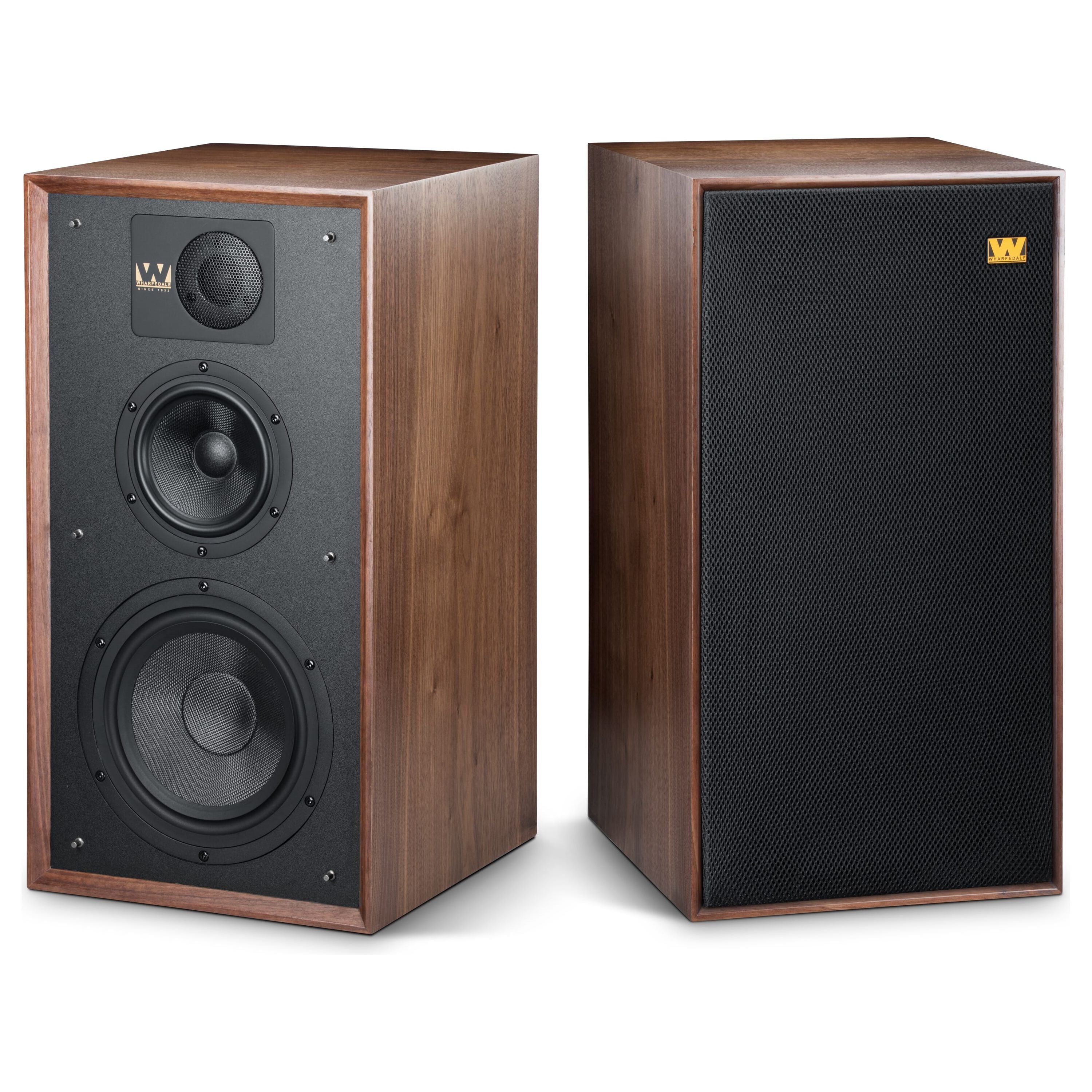
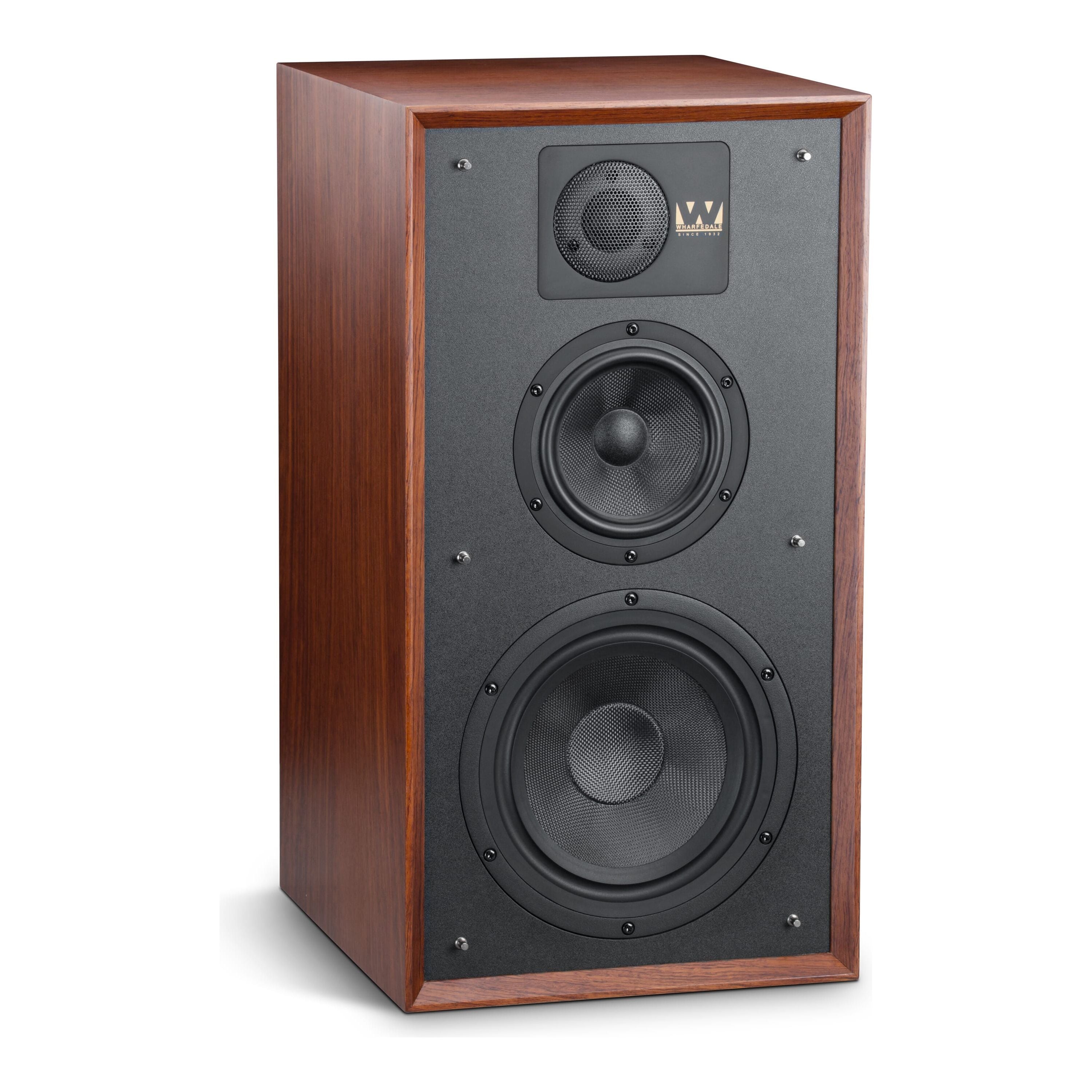
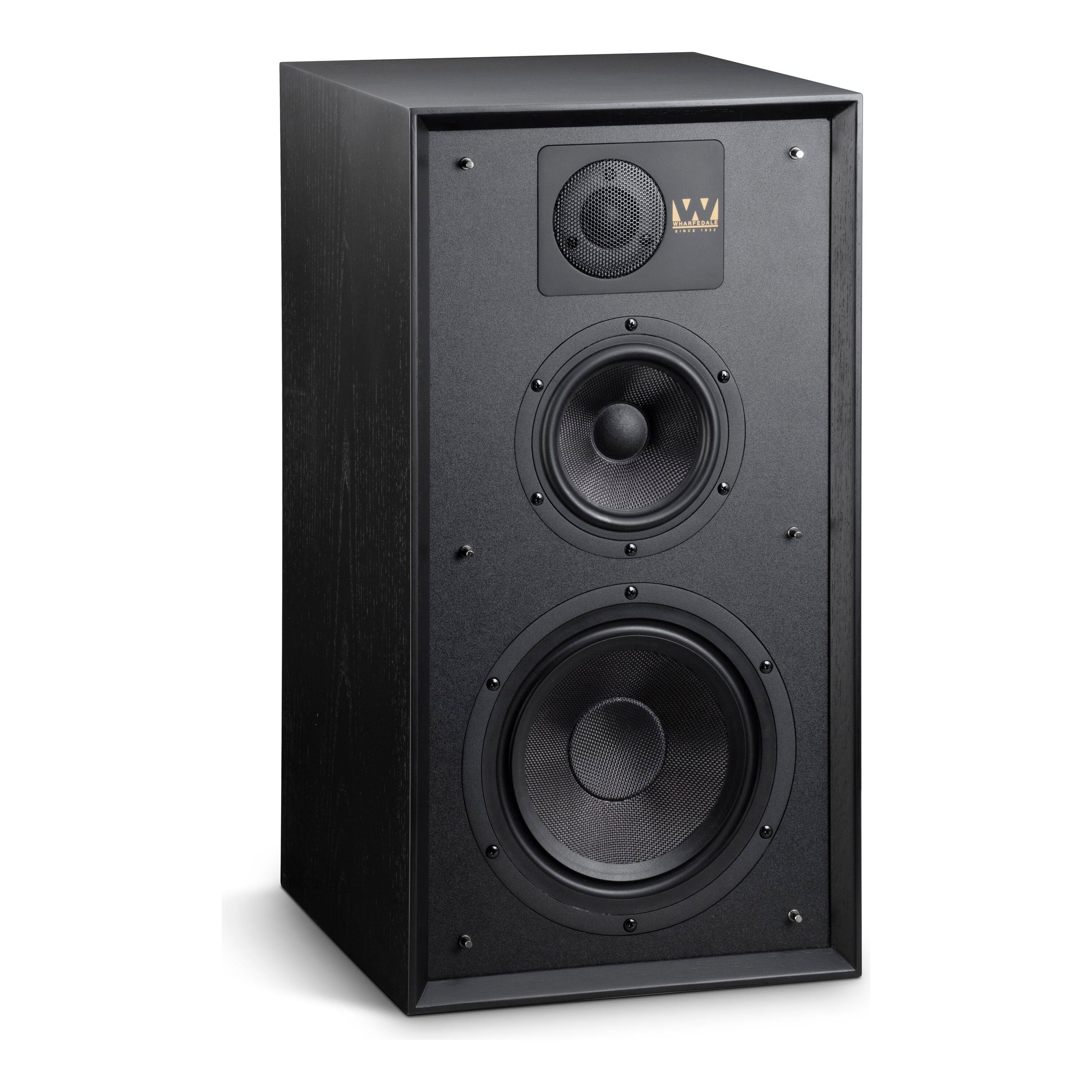
Three-way standmounts have all but disappeared, and the reason is cost. Giving the midrange its own driver and its own sealed sub-enclosure means an extra driver, an extra crossover section and a cabinet with a wall inside it. Almost everyone at this price builds a two-way instead and asks a six-inch cone to cover bass and midrange together. The Linton does not. The eight-inch woven Kevlar woofer on its die-cast chassis handles bass and nothing else; a five-inch Kevlar midrange sits in its own boxed-off volume above it, sealed away from the woofer’s pressure swings; and a one-inch fabric dome on a high-flux ferrite magnet takes the top.
That separation is what you hear. A voice does not have to share a cone with a bass guitar, so it stays put and stays clear when the low end gets busy. Crossover points are 630Hz and 2.4kHz, so the midrange driver covers nearly two full octaves either side of the vocal range on its own.
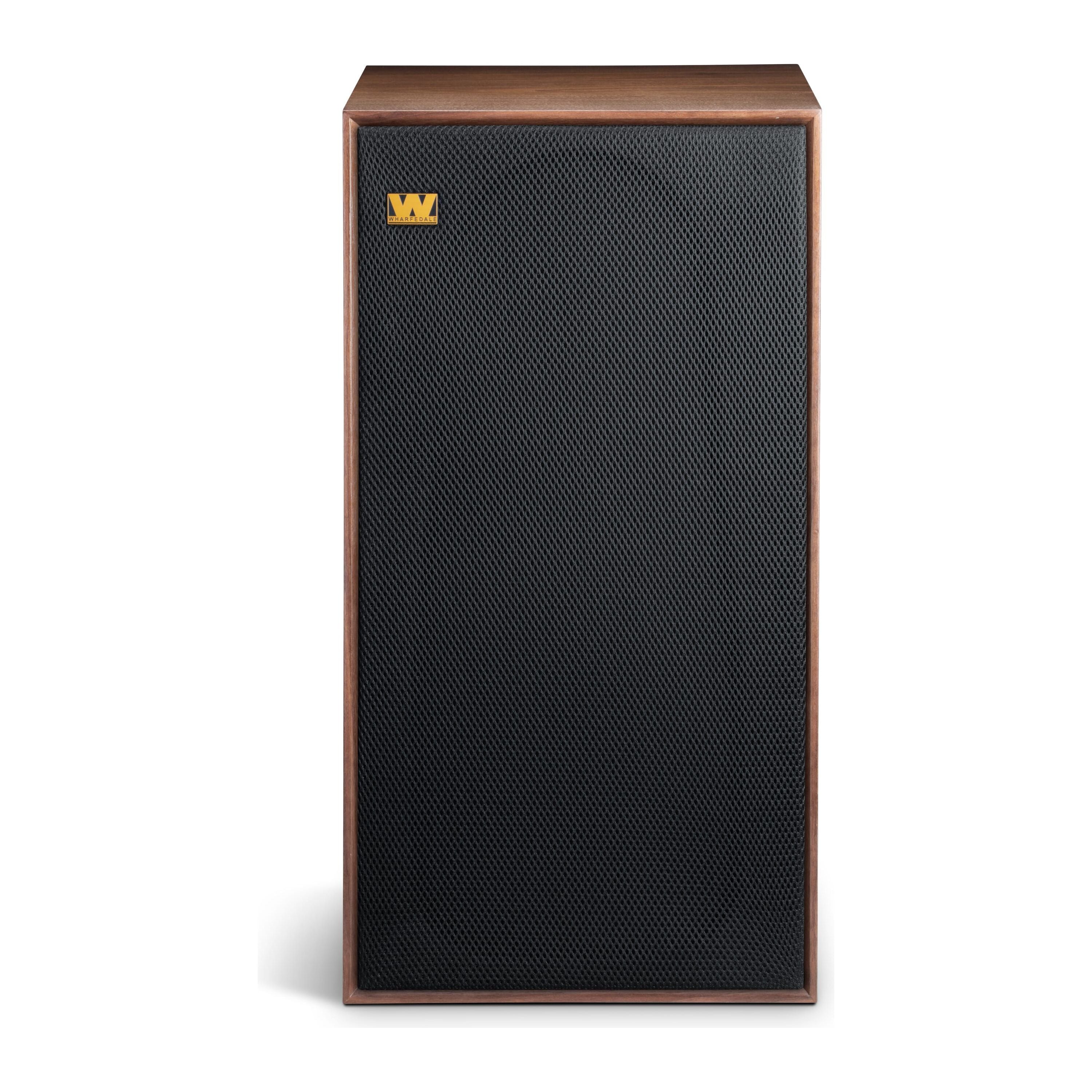
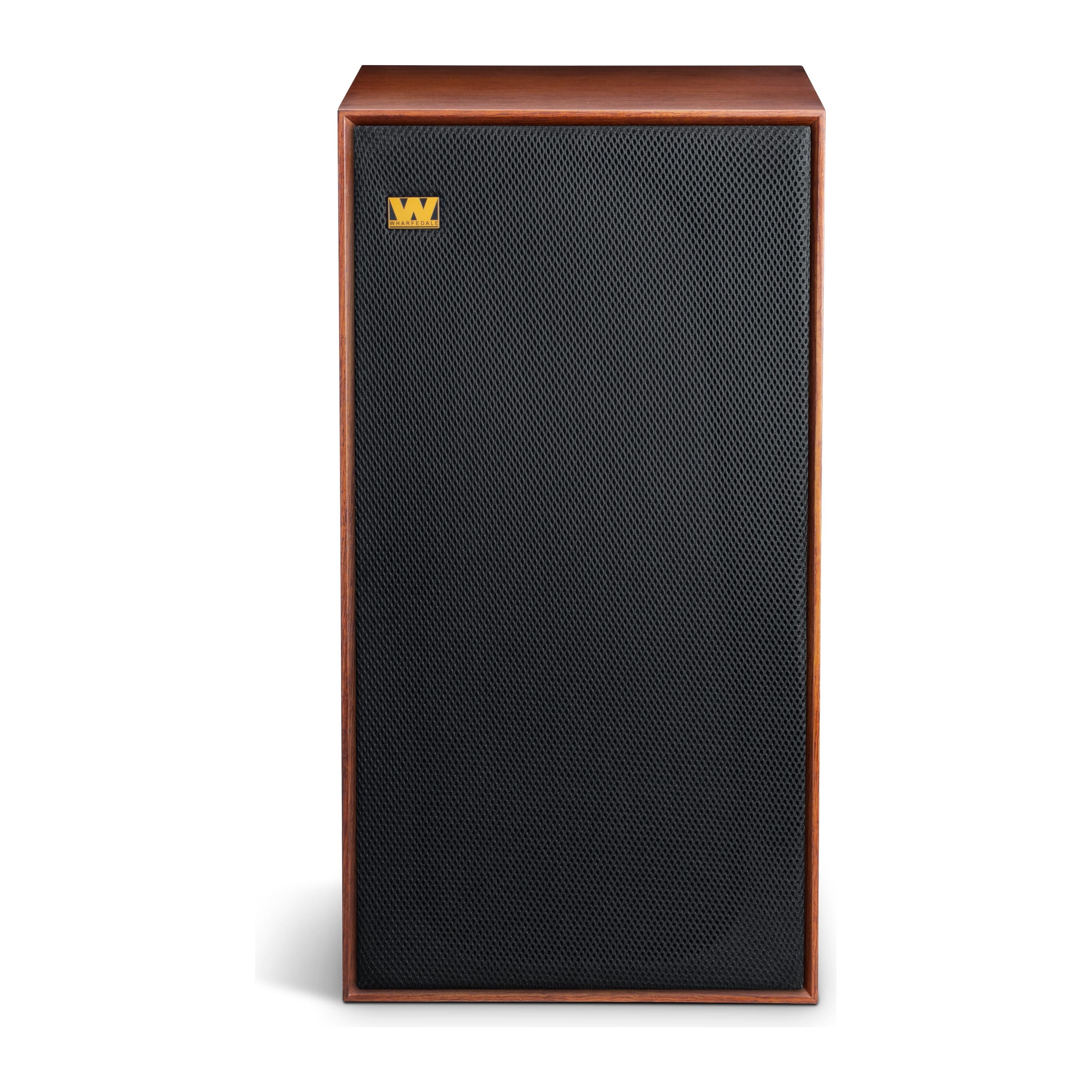
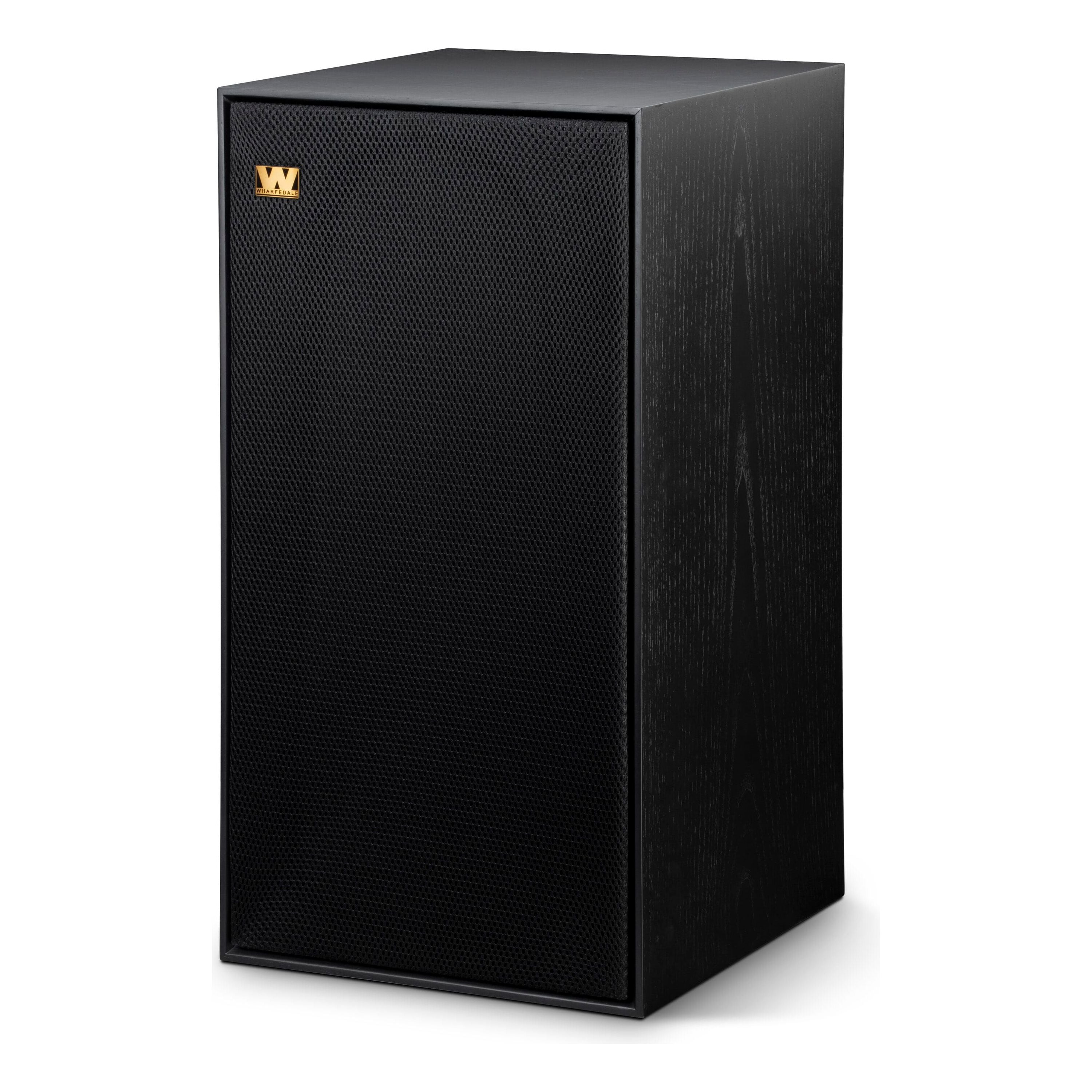
The cabinet is 57.6 litres, which is enormous by modern standmount standards, and it is built as a sandwich of high-density chipboard with MDF skins — Wharfedale’s design note argues that the layered construction scatters panel resonance more effectively than MDF alone. Inside it is damped with long-hair synthetic wool. Outside it is hand-matched veneer with an inset front baffle and a cloth grille, in the shape Wharfedale was selling in 1965.
At 90dB and a 6Ω nominal load dropping to 3.5Ω minimum, it is not a hard speaker to drive, and Wharfedale recommends anything from 25 to 200 watts.
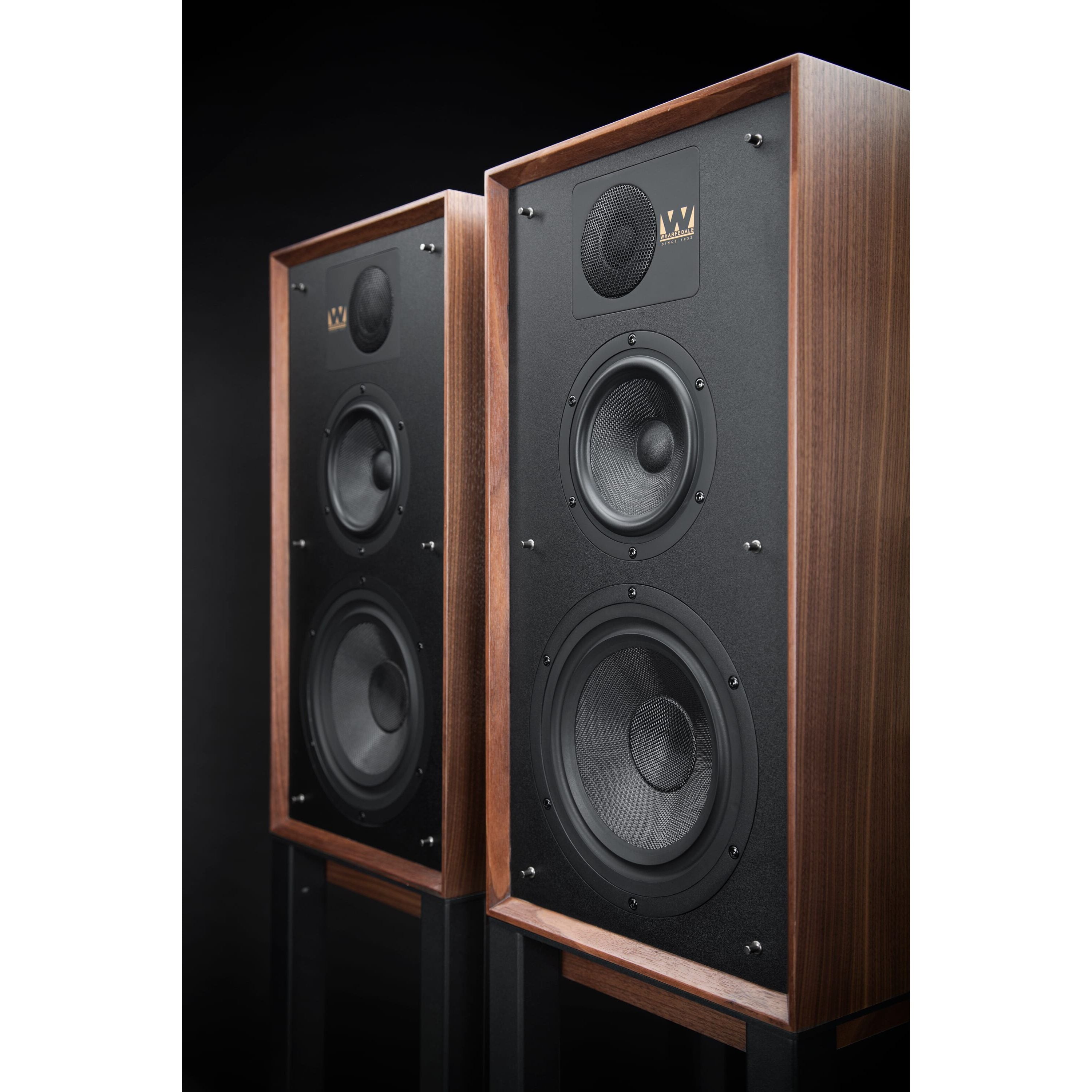
The stands are worth having. They are a rigid metal frame with veneered top and bottom plates matched to the speaker finish, they put the Linton at the right height for a seated listener, and the frame is spaced to take twelve-inch records underneath. Wharfedale genuinely markets that as a feature — they just do not publish how many LPs fit, and neither will we.
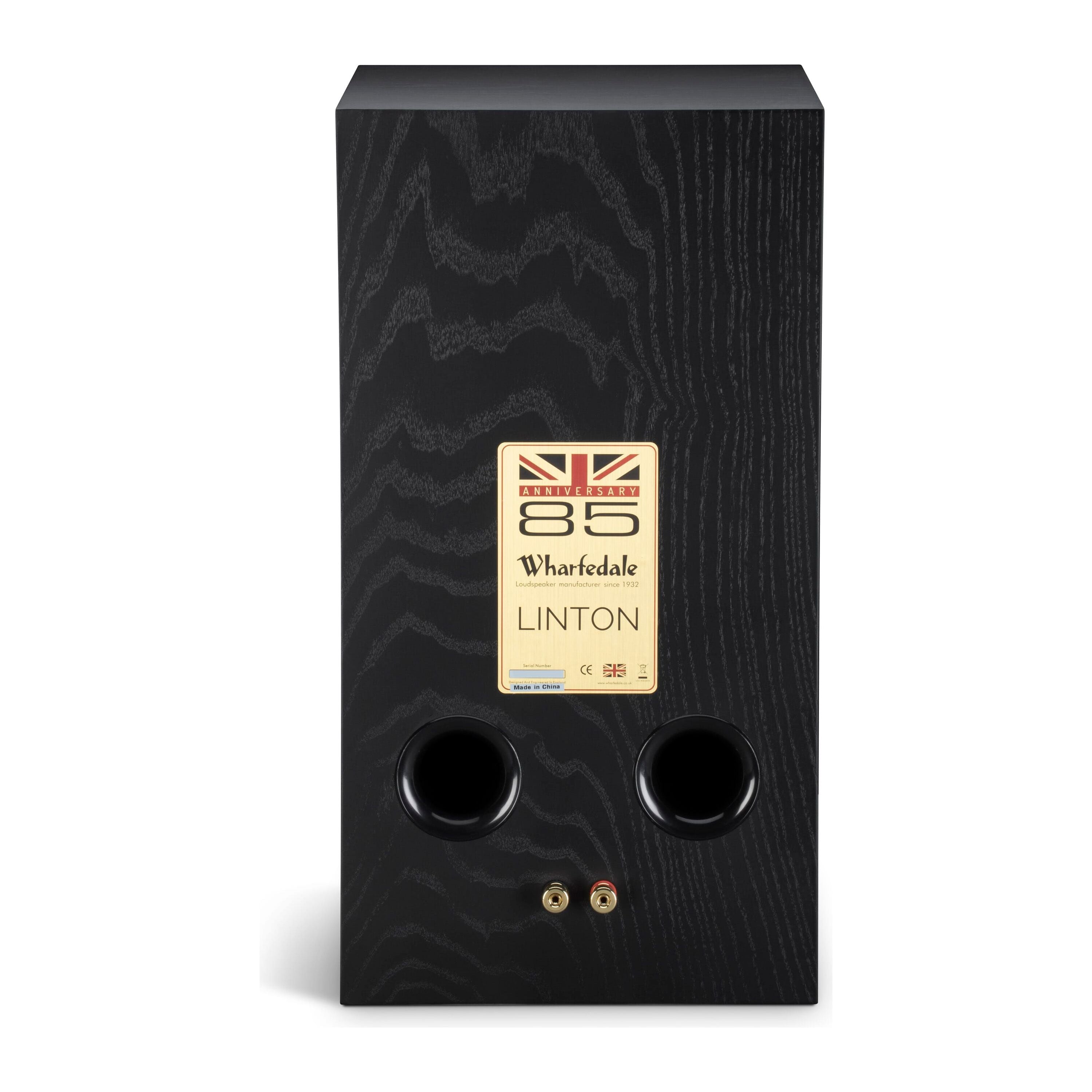
One naming note so you are not confused shopping elsewhere: Wharfedale UK now calls this speaker simply the Linton. The 85th Anniversary name is what the US distributor still uses, and it is the same speaker.
Features
- Genuine three-way design — the midrange gets its own driver and its own sealed sub-enclosure
- 8-inch woven Kevlar bass driver on a rigid die-cast chassis
- 5-inch woven Kevlar midrange in a separate internal enclosure
- 1-inch fabric dome tweeter on a high-flux ferrite magnet
- 57.6-litre bass reflex cabinet, high-density chipboard with MDF skins, damped with long-hair synthetic wool
- Hand-matched veneer with an inset front baffle and a traditional cloth grille
- Crossover at 630Hz and 2.4kHz
- 90dB sensitivity, 6Ω nominal, 25–200W recommended
- Optional matching stands with veneered top and bottom plates and space for records underneath
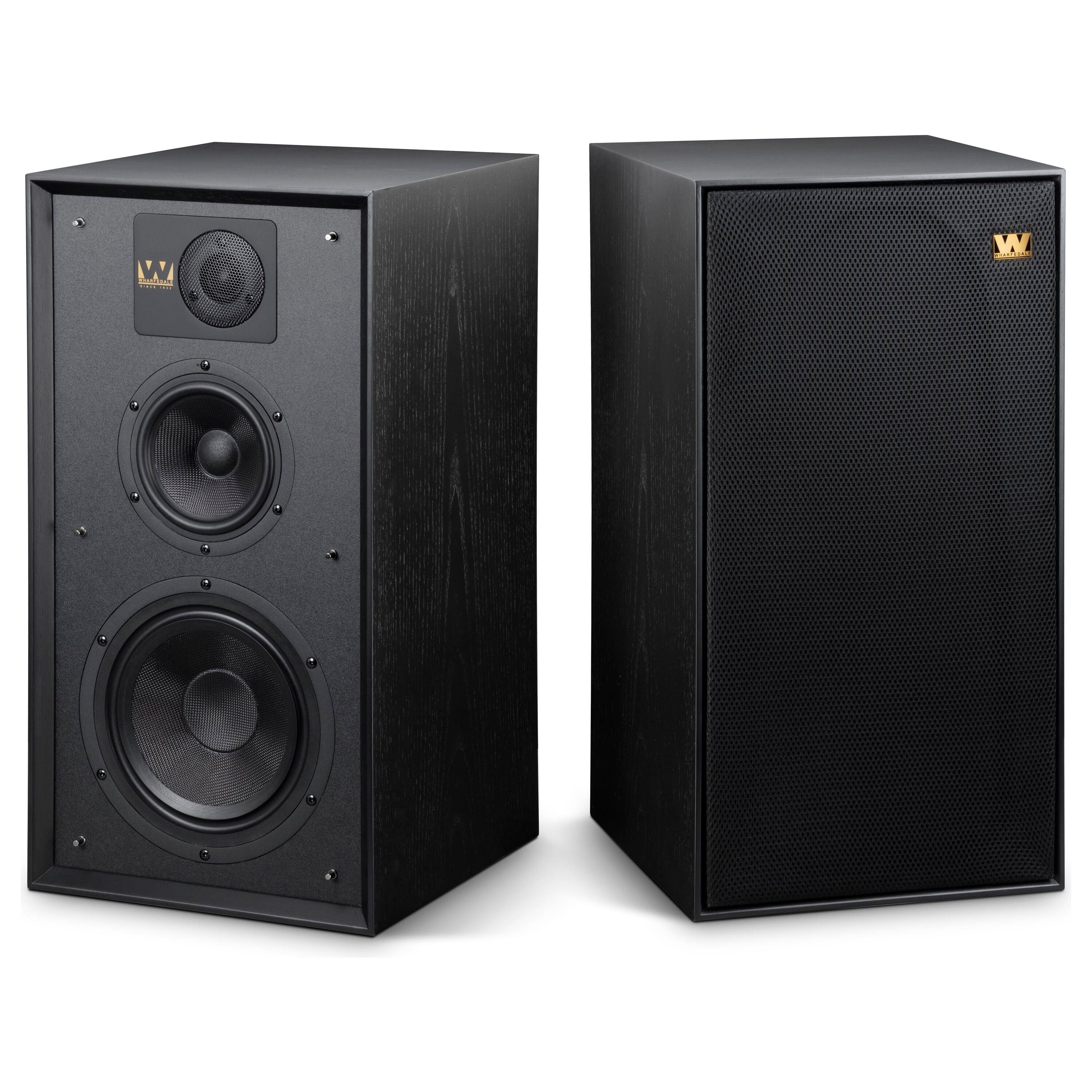
- Satin Walnut, Red Mahogany or Black Oak
Specifications — Speakers
- Type: Three-way vented-box standmount loudspeaker
- Sold as: A pair
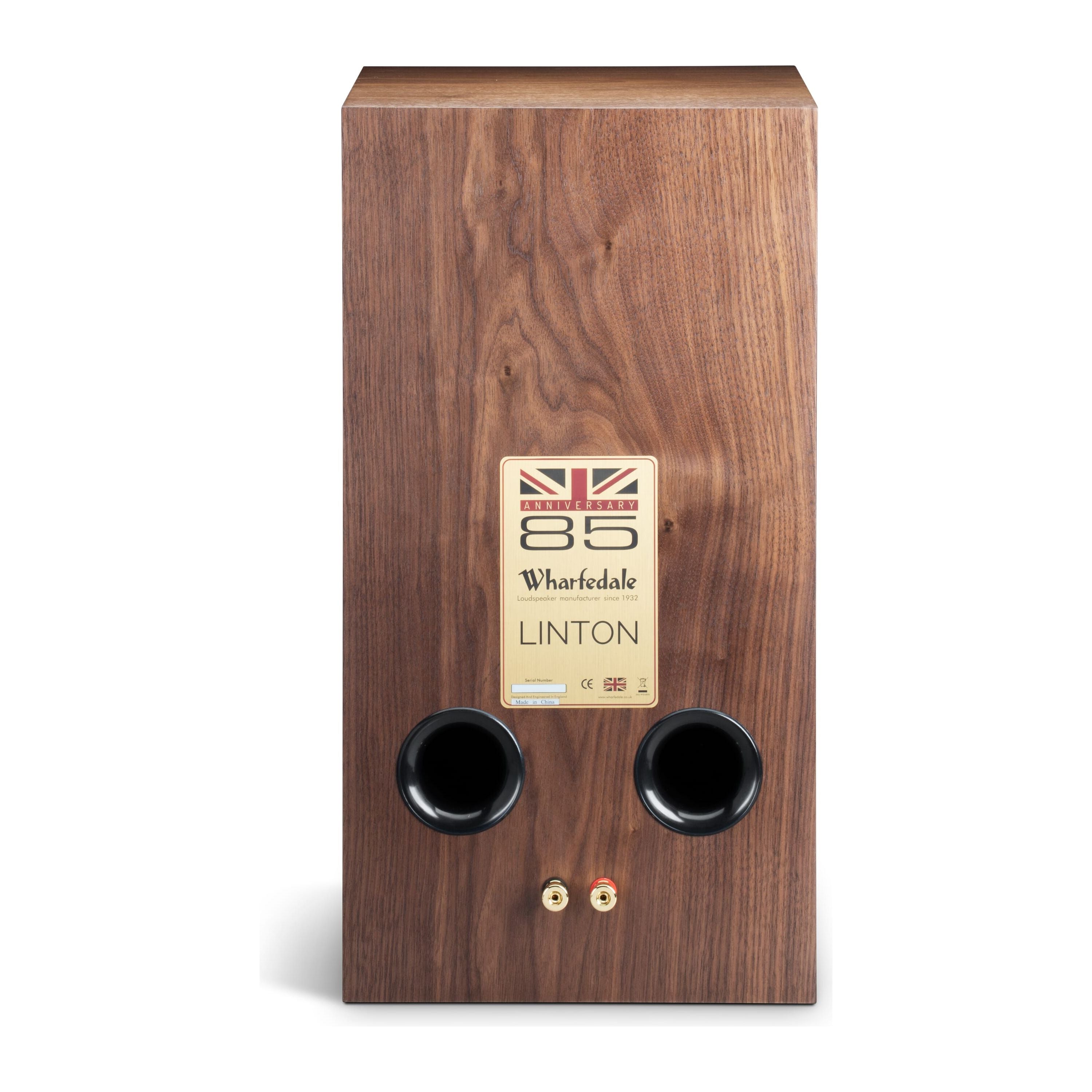
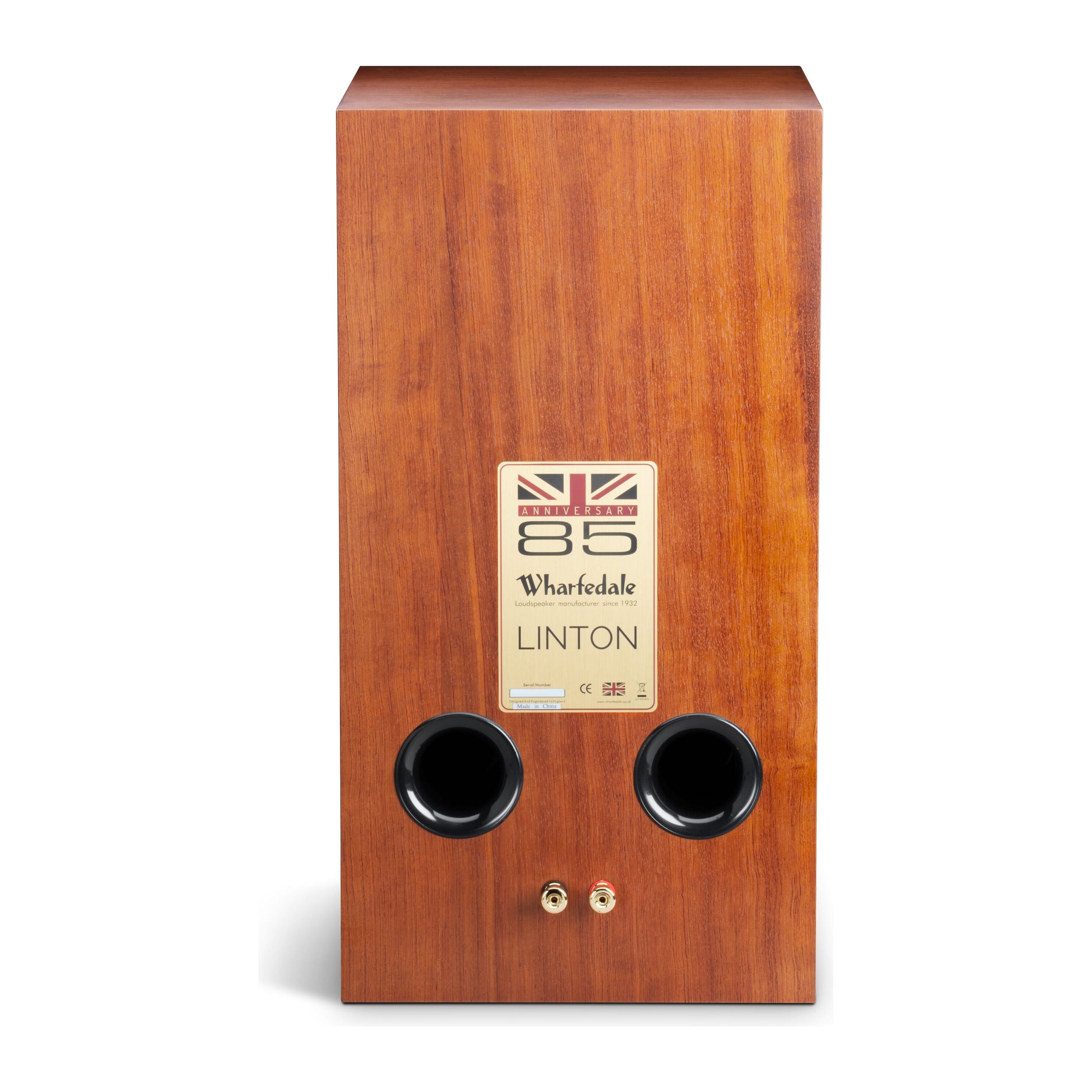
- Enclosure: Bass reflex. Wharfedale does not publish the port count or location. Stereophile’s review describes twin rear ports — that is the magazine’s observation, not a Wharfedale specification
- Bass driver: 8″ (200mm) black woven Kevlar cone on a rigid die-cast chassis. Magnet type not published
- Midrange driver: 5″ (135mm) black woven Kevlar cone, housed in its own internal enclosure. Chassis and magnet type not published
- Treble driver: 1″ (25mm) fabric dome with a high-flux ferrite magnet
- Crossover frequencies: 630Hz and 2.4kHz. Slopes not published
- Frequency response: 40Hz–20kHz ±3dB
- Bass extension: 35Hz at −6dB. Note this is a separate figure at a looser tolerance than the response spec above — the two should not be merged into a single 35Hz–20kHz claim
- Nominal impedance: 6Ω
- Minimum impedance: 3.5Ω
- Sensitivity: 90dB. Read the measurement condition, because Wharfedale’s is unusual and it matters when you compare speakers. Most makers quote sensitivity at 2.83V into one metre, or at one watt. Wharfedale quotes this one at 2.0V into one metre, which at a 6Ω nominal load corresponds to neither convention cleanly. It is not directly comparable with a 2.83V or 1W figure from another brand
- Recommended amplifier power: 25–200W
- Peak SPL: 110dB
- Cabinet volume: 57.6 litres
- Cabinet construction: A sandwich of high-density chipboard with MDF skins, which Wharfedale’s design note says scatters panel resonance more effectively than MDF alone. Damped internally with long-hair synthetic wool. No internal bracing is named
- Magnetic shielding: None. Wharfedale lists AV shielding as not fitted
- Binding posts and bi-wiring: Not published. Wharfedale’s manual PDF has no readable text layer, so we could not confirm the terminal type or whether bi-wiring is supported
- Grille: Traditional cloth grille. Attachment method not published
- Finishes: Satin Walnut, Red Mahogany and Black Oak. Black Oak is a current Wharfedale finish, added after launch
- Dimensions: 565mm high on the plinth, 300mm wide, 330mm deep plus 30mm for terminals. In inches, 22.2 x 11.8 x 13.0 plus 1.2 for terminals. Wharfedale does not state whether the height and width include the grille
- Weight: 18.4kg (40.6 lbs) per speaker. Wharfedale publishes this per speaker, not per pair
- Model naming: Wharfedale UK now calls this speaker simply the Linton. The 85th Anniversary name is retained by the US distributor. There is also a larger Super Linton in the current range, which is a different and bigger speaker
- Country of manufacture: Not published. Wharfedale states no country of manufacture on the product page, in the manual, or on IAG’s corporate site — and IAG’s own Made in Britain page names only the Wharfedale Dovedale as UK-built. For what it is worth, Stereophile has quoted IAG’s director of acoustic design saying the Denton, Linton and Super Linton ranges are made at IAG’s own Ji’an factory in Jiangxi Province, China. That is a magazine reporting a manufacturer’s remark, not something Wharfedale publishes, and we are labelling it accordingly rather than printing it as a fact.
Specifications — Linton Stands
- Type: Wharfedale Linton Stands, sold as a pair
- Construction: Rigid metal frame, which Wharfedale says provides critical damping of unwanted vibration, with hand-matched wood-veneered panels at the top and bottom to match the speaker finish
- Height: Not published by Wharfedale. The US distributor gives 17.2″. Wharfedale describes the stand only qualitatively, as presenting the listening axis correctly to a seated user, and publishes no combined speaker-plus-stand height
- Dimensions: 17.2 x 11.8 x 13.0 inches (H x W x D) per the US distributor. Wharfedale UK publishes no dimensions for the stands at all
- Weight: 31.9 lbs for the pair, per the US distributor. Not published by Wharfedale UK
- Record storage: Yes — Wharfedale markets the stand as spaced to host a twelve-inch vinyl collection underneath the speaker. They publish no capacity figure and we are not going to guess one
- Fillable column: Not published. Wharfedale makes no statement about sand or shot filling
- Spikes or feet: Not published. Neither Wharfedale nor the US distributor states that spikes or feet are supplied
- Country of manufacture: Not published